
What Is a Nerve Conduction Study?
A nerve conduction study is a test that measures how electrical signals travel through a nerve. Small sensors placed on the skin record the nerve's response to a brief electrical pulse. The results can help a clinician identify a nerve problem, such as pressure on a nerve at the wrist.
Quick Facts About Nerve Conduction Study
- Category
- Nerve function test
- Used for
- Finding possible nerve problems
- Common confusion
- Electromyography, or EMG
- Also called
- Nerve Conduction Test, NCS
- Often discussed with
- Carpal Tunnel Syndrome Treatment, Pinched Nerve Treatment
Key Takeaways About Nerve Conduction Study
- Results can point to the location of a nerve problem.
- Your symptoms help give the test results context.
- A nerve conduction study isn't the same as an EMG.
How Nerve Conduction Study Works
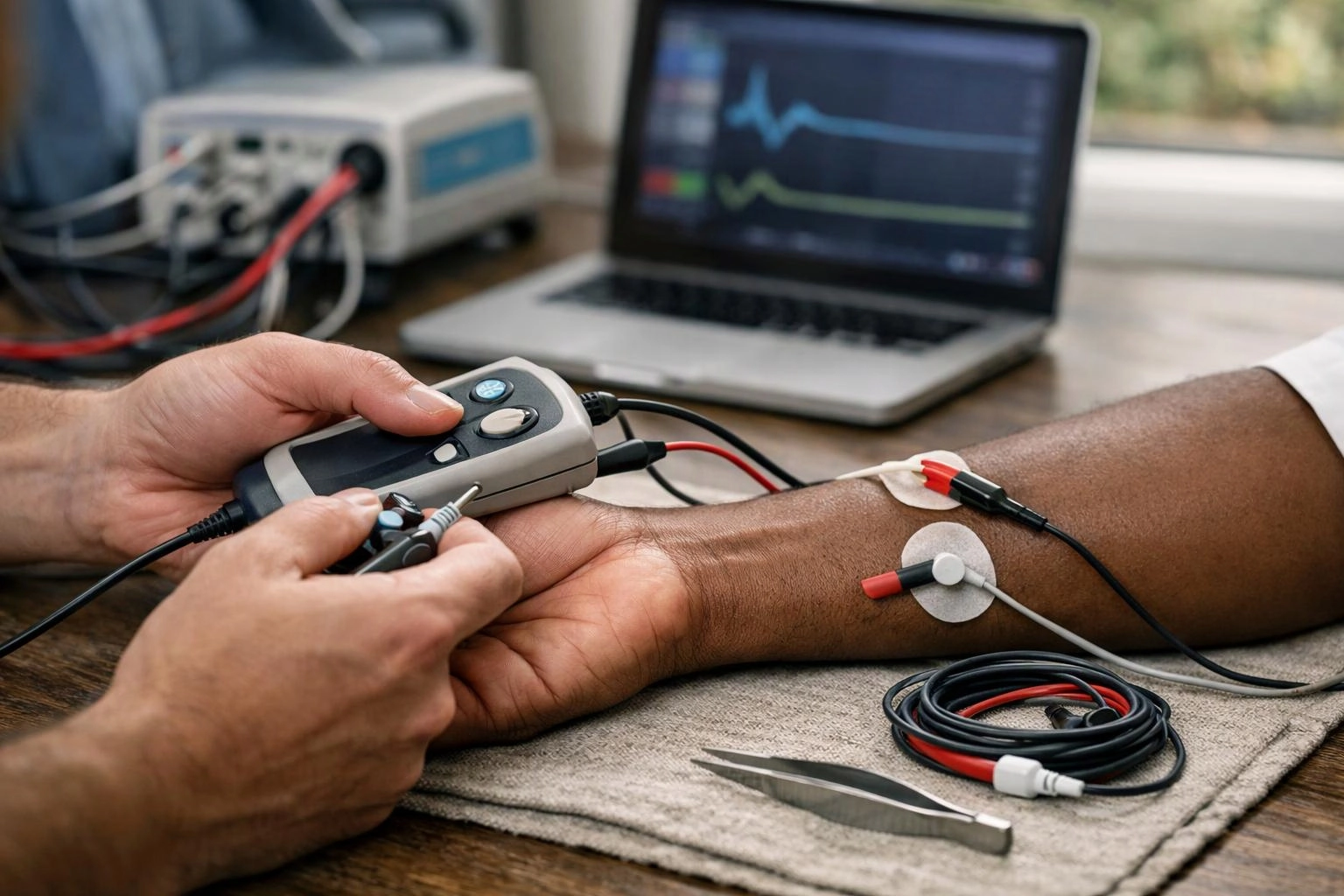
A nerve conduction study uses skin sensors to capture a nerve's response to electrical stimulation. A clinician places sensors along the path of the nerve being checked. The equipment records how quickly the response travels and how strong it is. Related service: Carpal Tunnel Syndrome Treatment.
Related glossary terms: Cervical Radiculopathy, Ergonomics, Inflammation.
For suspected carpal tunnel syndrome, the study can focus on the median nerve across the wrist. A slower response there may point to pressure on that nerve. The clinician reads the results alongside your symptoms and physical exam.
An electromyography test, or EMG, examines electrical activity in muscles. It isn't the same test, though a clinician may use both to investigate symptoms. Each test gives a different view of how nerves and muscles work.
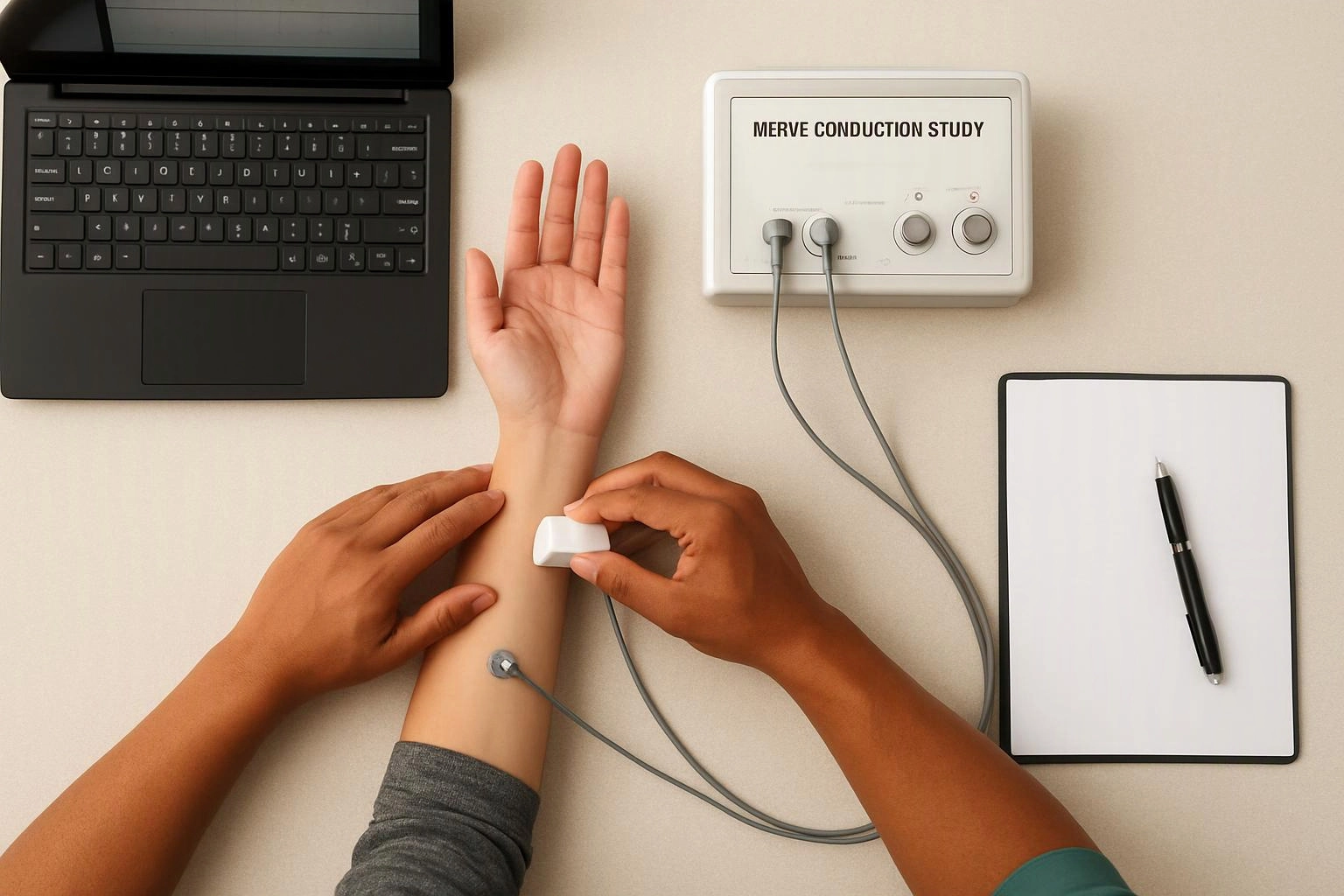
From the Arrowhead Clinic Chiropractor team
When we assess symptoms linked to carpal tunnel syndrome, we consider how your hand feels and moves. If nerve conduction study results are available, we review them alongside your exam. The location of numbness can help us understand how the findings relate to your symptoms.
Nerve Conduction Study in Practice: A Real-World Example
A person with tingling in the thumb and fingers has a nerve conduction study as part of a carpal tunnel assessment. The results show a slow response across the wrist, which the clinician considers alongside the person's symptoms.
Related Terms
Cervical Radiculopathy
Cervical Radiculopathy is a condition that affects a nerve root in the neck.
Ergonomics
Ergonomics is the study of how work tasks, tools and surroundings fit the people who use them.
Inflammation
Inflammation is a protective response that helps the body react to injury, infection, or irritation.
Referred Pain
Referred Pain is pain felt in an area away from the tissue where the pain starts.
Arrowhead Clinic Chiropractor
Have Questions About Nerve Conduction Study?
Contact Arrowhead Clinic Chiropractor for practical guidance on Nerve Conduction Study and related chiropractor work in Brunswick.