What Is Spinal Decompression?
Spinal Decompression is a treatment approach that aims to relieve pressure on structures in the spine. Nonsurgical decompression uses a pulling force, often called traction, to gently stretch the spine. Surgical decompression removes tissue that presses on nerves. Both approaches may be discussed in relation to disc problems.
Quick Facts About Spinal Decompression
- Category
- Spinal treatment approach
- Used for
- Pressure associated with disc problems
- Common confusion
- Nonsurgical traction versus surgery
- Often discussed with
- Herniated Disc Treatment
Key Takeaways About Spinal Decompression
- Nonsurgical decompression uses traction rather than an operation.
- A herniated disc may be part of the treatment discussion.
- Decompression and a chiropractic adjustment aren't the same procedure.
How Spinal Decompression Works
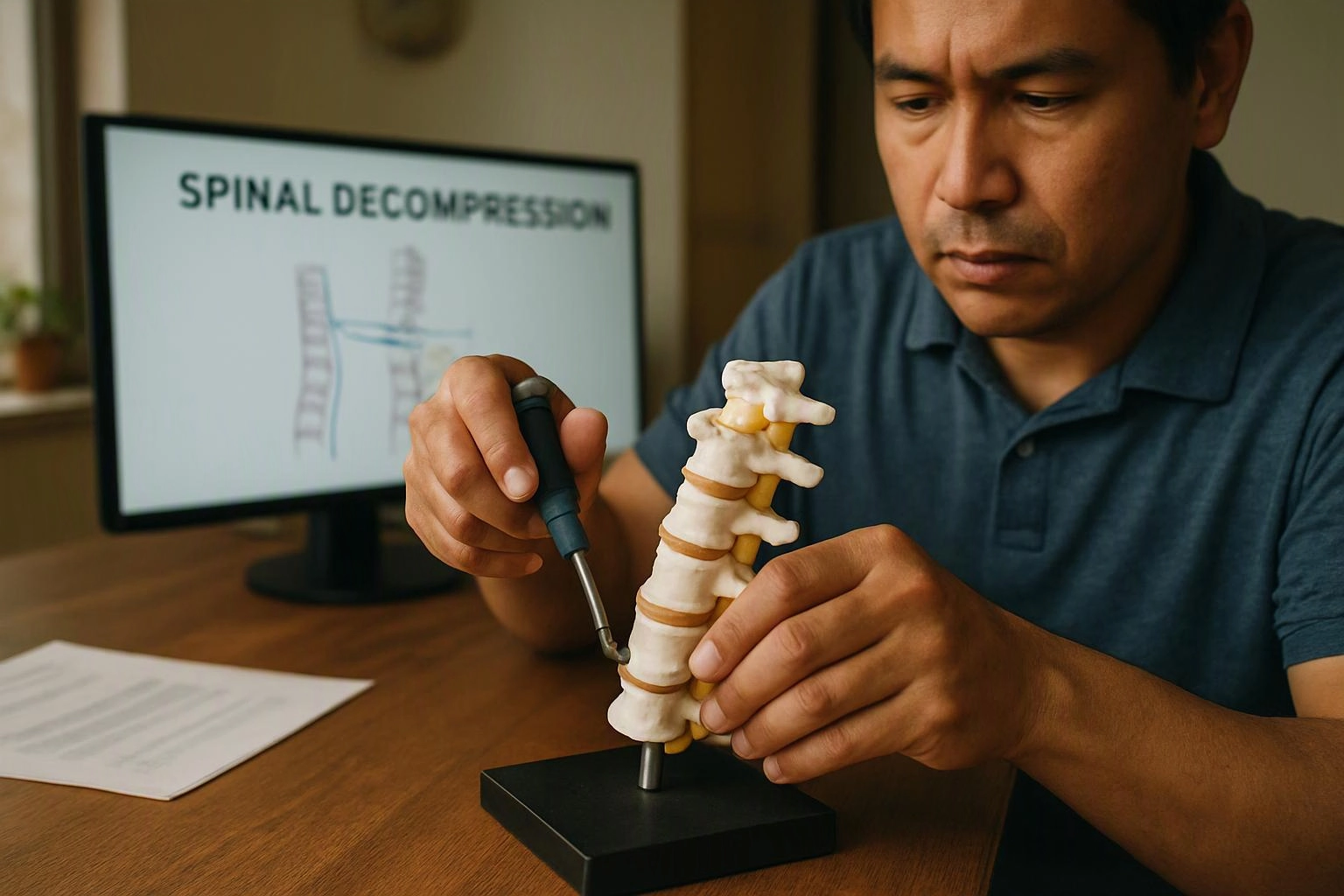
Spinal decompression works differently depending on the method. With nonsurgical traction, a table or device applies a controlled pull to part of the spine. The pull aims to create space between spinal bones and reduce pressure on nearby tissues. Related service: Herniated Disc Treatment.
Related glossary terms: Disc Bulge, Lumbar Radiculopathy, Spinal Stenosis.
A herniated disc occurs when material inside a spinal disc pushes through its outer layer. That material may press on a nearby nerve. Traction aims to ease pressure, but it doesn't remove disc material.
Surgical decompression takes a different approach. A surgeon removes bone or other tissue to make more room for a nerve. The term decompression describes the goal, while the procedure depends on the approach used.
From the Arrowhead Clinic Chiropractor team
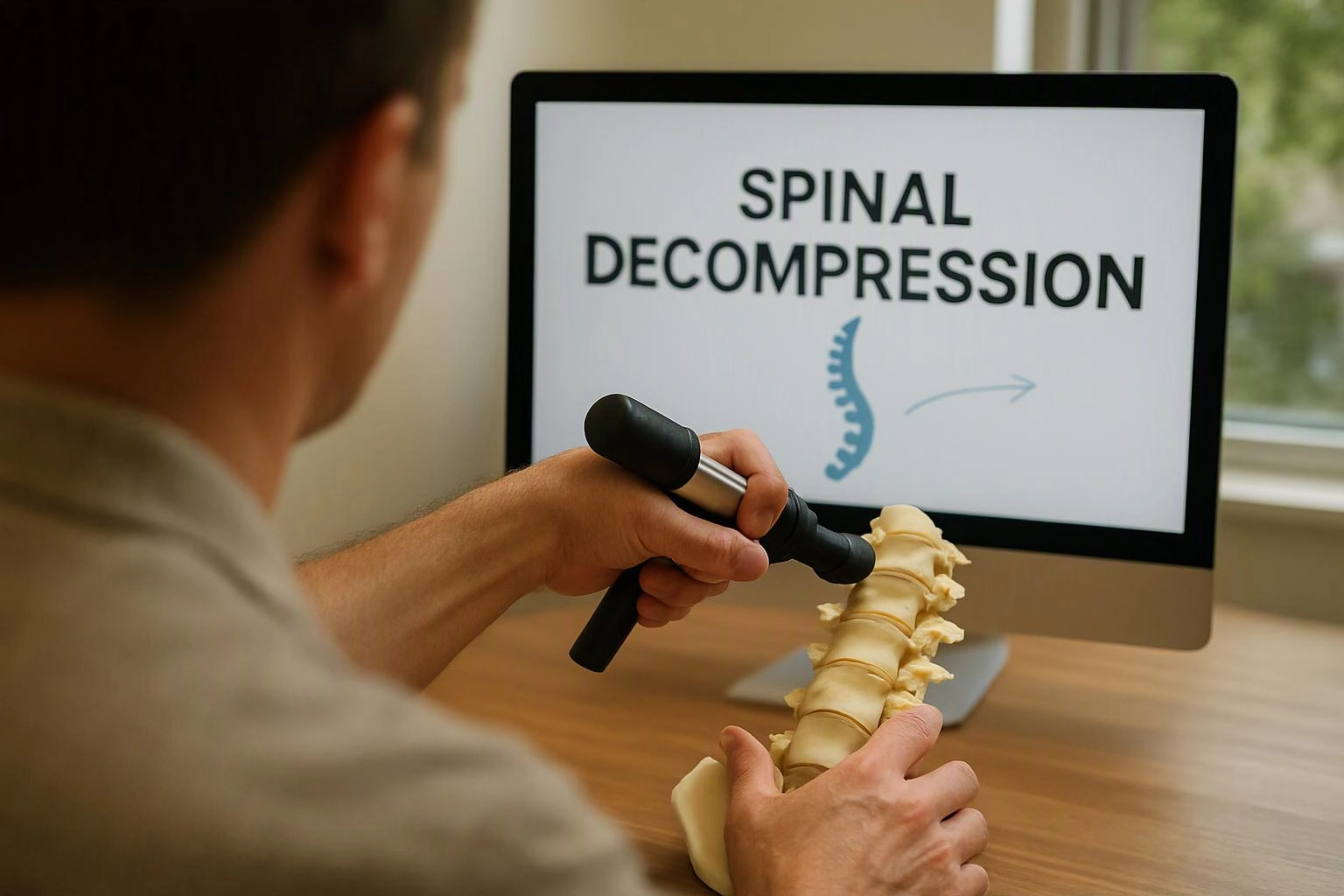
When we discuss spinal decompression as part of herniated disc treatment, we consider where your symptoms occur. We also explain the difference between a traction approach and surgery. That distinction helps you understand what the term means in your care discussion.
Spinal Decompression in Practice: A Real-World Example
A person with a herniated disc asks whether spinal decompression might be part of treatment. The care discussion covers the location of the person's symptoms and explains how traction differs from surgery.
Related Services
Related Terms
Disc Bulge
A disc bulge is a change in a spinal disc that extends its outer edge beyond its usual space.
Lumbar Radiculopathy
Lumbar Radiculopathy is a nerve condition that starts in the lower back and can affect the leg.
Spinal Stenosis
Spinal Stenosis is a narrowing of spaces in the spine that can put pressure on nerves or the spinal cord.
Degenerative Disc Disease
Degenerative Disc Disease is a condition in which discs between the bones of the spine change with age and wear.
Arrowhead Clinic Chiropractor
Have Questions About Spinal Decompression?
Contact Arrowhead Clinic Chiropractor for practical guidance on Spinal Decompression and related chiropractor work in Brunswick.