
What Is Range of Motion?
Range of Motion is the amount of movement available at a joint in a particular direction. It describes movements such as bending a knee or turning your neck. The available movement depends on the joint and the direction of movement, as well as the tissues around it.
Quick Facts About Range of Motion
- Category
- Joint movement
- Used for
- Describing movement during an exam
- Common confusion
- Joint movement versus muscle strength
- Also called
- ROM
- Often discussed with
- Corrective Exercise Therapy
Key Takeaways About Range of Motion
- Active movement uses your own muscles.
- A movement check can guide exercise choices.
- More movement isn't the same as more strength.
How Range of Motion Works
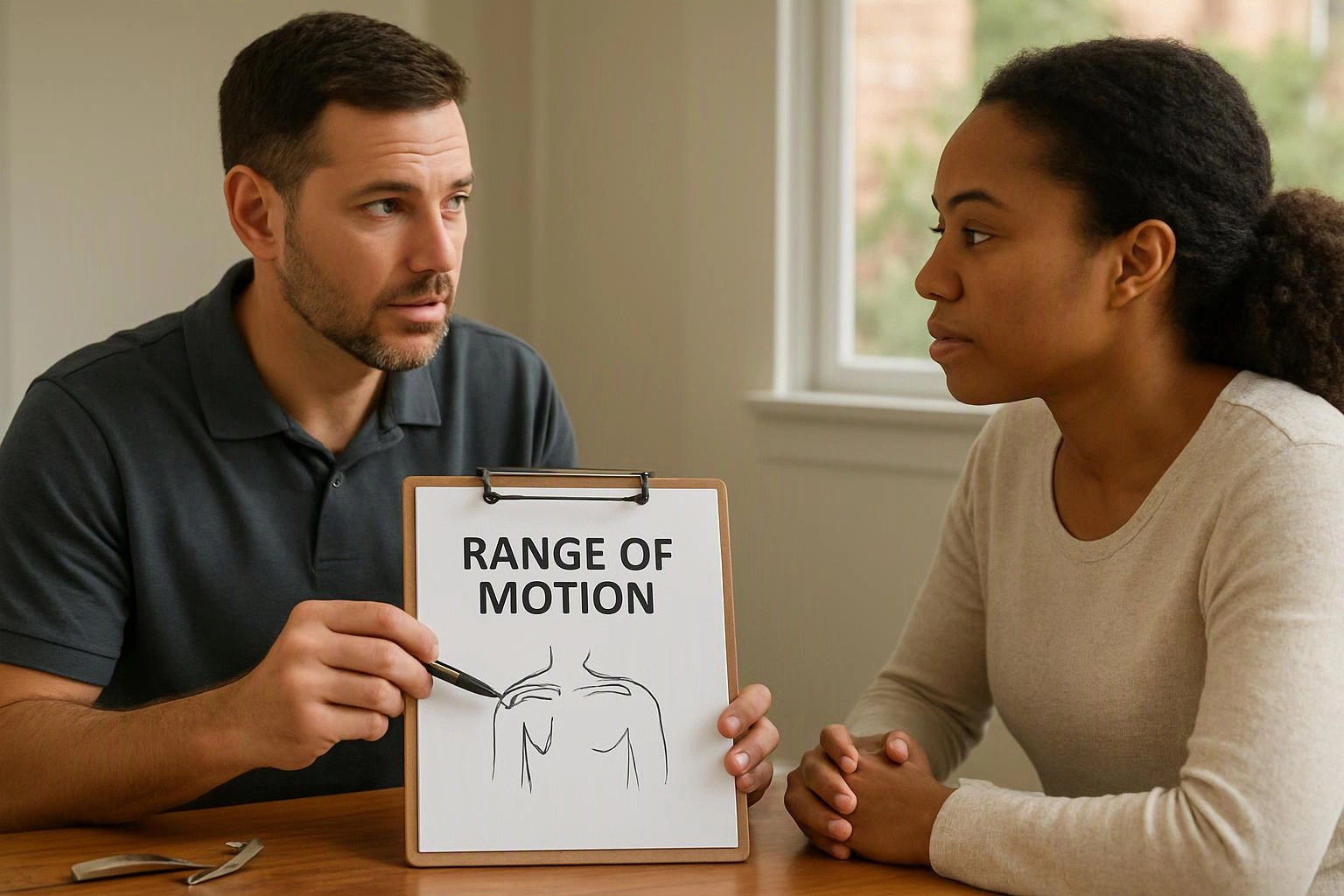
Range of Motion is described for a specific joint and movement. A shoulder, for example, moves along different paths when you lift or rotate your arm. Each path gives a clinician a separate view of how that joint moves. Related service: Corrective Exercise Therapy.
Related glossary terms: Joint Mobilization, Core Stability, Rotator Cuff.
During active movement, you move the joint yourself. During passive movement, a clinician moves the joint while you relax. A clinician may use a tool called a goniometer to describe the angle of a joint. The clinician may also observe the movement without a tool.
A movement check can include how the motion feels as well as how far it goes. For example, you might notice stiffness when turning your head. That detail gives the clinician context for the movement they observe.
From the Arrowhead Clinic Chiropractor team
When we use corrective exercise therapy, we look at how you move during the exercise. We may adjust the movement to suit what you can do comfortably. Your feedback helps us understand how the exercise feels, not just how it looks.
Range of Motion in Practice: A Real-World Example
A person has trouble lifting an arm overhead during corrective exercise therapy. The clinician observes the shoulder movement and selects an exercise that fits the person's available motion.
Related Services
Related Terms
Joint Mobilization
Joint Mobilization is a hands-on technique that moves a joint through a controlled range of motion.
Core Stability
Core Stability is the ability to control your trunk as you move or hold a position.
Rotator Cuff
The rotator cuff is a group of muscles and tendons that supports the shoulder joint and helps move the arm.
Fascia
Fascia is connective tissue that surrounds and supports structures throughout the body.
Arrowhead Clinic Chiropractor
Have Questions About Range of Motion?
Contact Arrowhead Clinic Chiropractor for practical guidance on Range of Motion and related chiropractor work in Brunswick.